
Creatine Benefits for Women: Strength, Muscle and the Evidence
That last rep. A little more strength. What can creatine add to your training—and which promises run ahead of the research?

What can creatine do for women?
Creatine may help some women with strength and high-intensity exercise performance, but the result is not guaranteed. A 2026 review of research in exercising women found small potential benefits, with low or very low certainty across the outcomes it assessed.
That is a useful starting point for a decision, especially when the promise on your screen sounds much bigger. “Supports my training” and “changes everything about my health” are very different claims. Start with the outcome you care about, then look for evidence that actually measured it.
Strength and short, hard efforts
Creatine helps replenish the quick energy system used during brief, intense activity. The 2021 research review explains this role; think of the demands of a hard set rather than a caffeine-like feeling.
The women-specific 2026 review combined results from 21 studies in its quantitative analysis. Some strength, power and high-intensity performance measures appeared to benefit, but the studies differed and certainty was limited. It does not establish a reliable percentage improvement for every woman or every workout.
A practical question to ask yourself is: “Which part of my training am I hoping to support?” A clearly defined goal is easier to evaluate than a promise to feel like a new person. Keep a simple record of the exercise, resistance, repetitions and how the session felt. Your own record can describe your progress; it cannot isolate a supplement’s effect from the rest of your routine.
Muscle, water and the number on the scale
The 2021 review describes water changes that can occur with creatine use, particularly early on. Body weight, body fat and lean mass are different measurements. A scale reading alone cannot tell you which one changed. For more on interpreting water-related scale changes, see our creatine and water weight guide.
The 2026 women-specific review also pooled body-composition measures, but those measures did not all point in the same desirable direction. That pooled result should not become a “burns fat” claim.
When you see a before-and-after story, ask what was actually measured. Was it body weight, a scan-based measurement or a photograph? Was there a comparison group? What else changed? A personal story may be meaningful to its author without showing what caused the result.
Bone health deserves its own answer
In a two-year randomized trial involving 237 postmenopausal women, participants followed resistance-training and walking programs while taking creatine or placebo. Creatine did not improve bone mineral density at the measured hip and spine sites compared with placebo. Some measures of bone geometry improved. Those are different outcomes.
This trial cannot support a blanket promise that creatine builds denser bones, and it does not establish fracture prevention. It also does not answer the same question for every age group. If bone health is your main concern, take that specific goal to your healthcare professional rather than relying on a general “women’s wellness” claim.
What does creatine research tell us about menopause?
Creatine during menopause has not been established as a treatment for menopause symptoms. The small studies in older and postmenopausal women have focused on exercise-related strength, muscle, or bone measurements—not hot flashes, sleep, mood, or the wider menopause transition.
In one randomized trial, 18 healthy older women (average age about 65) completed 12 weeks of resistance training. The creatine group improved more than the placebo group on several strength and muscle measures. Both groups trained, and the study was small, so it cannot predict an individual result or show that creatine alone caused every change. Read the trial abstract.
Does creatine relieve hot flashes or menopause-related sleep changes?
Those outcomes were not tested in the trials described here, so this evidence does not show that creatine relieves them. The two-year postmenopausal trial above also found no difference in measured bone mineral density at the hip or spine versus placebo; it does not establish fracture prevention.
Read the benefit claim all the way through
A useful claim tells you who was studied, what they took, what else they did and which outcome changed. “Studied in women” is only the beginning. Were participants trained athletes, recreational exercisers or postmenopausal women? Did they follow an exercise program? Was the comparison with placebo or simply with their own starting point?
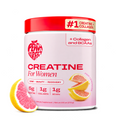
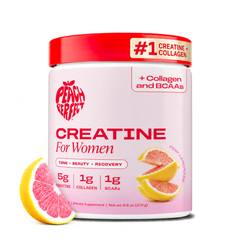
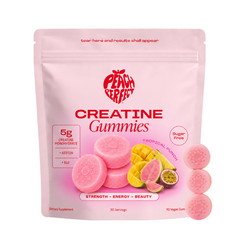
Check whether the research tested an ingredient or the exact product you are considering. These studies examine creatine interventions; they are not trials of Peach Perfect’s finished formula.
Build your next step around your actual goal
If you are considering creatine, first name the question you want answered: training performance, product quality, price or how to read directions. You do not have to solve all four at once.
For product comparisons, check the exact ingredient form, amount per labeled serving and the documentation available for that product. Our creatine quality guide walks through those questions. For serving language and directions, use our creatine routine guide.
The FDA recommends discussing supplements with a healthcare professional. That is especially relevant if you take medication, have a health condition, or are pregnant or breastfeeding. Follow the directions on the product you actually have; a research protocol is not a personalized instruction.
A few more good questions
Does creatine guarantee better workouts?
No. The women-specific review found possible small benefits with limited certainty. Your outcome cannot be predicted from a pooled research result.
Is a change in weight the same as a change in body fat?
No. Those are different measurements, and a scale alone cannot identify what changed.
Sources
- Lin and colleagues, Frontiers in Nutrition, 2026 — systematic review and meta-analysis — Women-specific exercise outcomes and limits of body-composition interpretation
- Antonio and colleagues, JISSN, 2021 — narrative review — Energy-system role and distinction between water, weight and body composition
- Chilibeck and colleagues, MSSE, 2023 — randomized trial — Bone mineral density and bone geometry are different outcomes
- FDA — consumer questions about dietary supplements — Professional suitability discussion and product directions