
Can You Put Creatine in Coffee?
Your morning coffee already has a place in your routine. Does your creatine belong in the same cup?

One cup, three questions
The coffee is ready. Your creatine is on the counter. Combining the two sounds like an easy way to remember one more part of your morning. Then you search it and find two very different headlines: coffee makes creatine useless; coffee and creatine are the perfect pair.
Creatine has been mixed with coffee in research, but that does not make every creatine product suitable for every coffee drink. Check your product’s preparation directions first. Three separate questions matter: will the powder mix, what does caffeine do alongside creatine, and how does the drink feel for you?
A smooth stir is a mixing result. A change in exercise performance is a different result. Keeping those questions separate makes the research much easier to use.
What the coffee study actually found
In a 2016 randomized study, 54 physically active men took part in a five-day trial. Researchers compared creatine loading alone, creatine loading with coffee, creatine loading with caffeine powder, and placebo.
None of the creatine groups significantly outperformed placebo on the study’s performance tests. Four participants reported mild stomach discomfort in the caffeine-powder group; none was reported in the coffee group. That is a useful distinction, but a short trial in men cannot establish that coffee and creatine will suit everyone—or predict long-term results in women.
This study also did not determine the ideal temperature for your morning mug. Its loading protocol is research context, not a recipe to copy into a multi-ingredient supplement routine.
Does caffeine cancel out creatine?
The evidence does not support that simple rule. A systematic review of 10 studies separated caffeine used during a creatine-loading period from caffeine taken before an exercise test after loading. Some studies in the latter group found an additional performance benefit; taking caffeine throughout loading showed no apparent overall added benefit.
No added benefit is not the same as proof that caffeine destroys creatine. These studies used different schedules and performance tests, so they do not establish one universal answer for everyday coffee drinkers. They also do not show that putting the ingredients in the same cup works better than taking them separately.
If you enjoy coffee, there is no need to turn this into an elaborate timing ritual based on a headline. For the broader before-or-after-workout question, read our creatine timing guide.
What about hot coffee?
Heat is only part of the picture. A review of creatine stability describes how dissolved creatine can gradually convert to creatinine. Temperature, acidity and time in solution all affect that process. Dry powder and a prepared drink are different storage situations.
Those findings do not tell us exactly how much creatine remains in your particular latte after a few minutes. They also do not justify the claim that touching hot coffee instantly ruins it. The practical distinction is between preparing a drink to consume and leaving a mixed drink sitting for a long period.
Follow the product’s mixing and storage instructions. If coffee is an allowed mixer, prepare it when you plan to drink it rather than treating a batch made in advance as equivalent. If hot drinks are not covered by the directions, ask the manufacturer before experimenting. There is no evidence-based universal coffee temperature or waiting time established by the sources here.
Make the routine work for your actual product
Before the scoop reaches the mug, make three quick checks:
- The formula: is it plain creatine, a flavored blend, or a product containing other active ingredients? A study of creatine monohydrate does not test every formula.
- The directions: check the serving size, mixing liquid and preparation instructions. A kitchen spoon is not automatically the same measure as the product’s scoop.
- The drink: consider the flavor combination and whether you will finish it. Coffee does not have to be the mixer simply because it is your morning reminder.
You can keep your coffee exactly how you like it and use a separate drink prepared according to your creatine label. That is a preference and convenience choice, not a promise of better absorption. Our guide to taking creatine explains serving size and ingredient amounts.
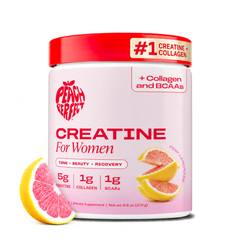
For our Pink Lemonade creatine powder, review the current product directions and full ingredient list. The coffee studies above did not test this flavored formula, and they are not a hot-coffee recipe for it.
If your stomach disagrees, pay attention
A convenient routine is not worth pushing through discomfort. The coffee trial’s lack of reported symptoms in one small group does not guarantee that a different product, amount or drink will feel the same for you. Separating drinks also is not a proven fix for digestive symptoms.
If you suspect a supplement is causing an adverse reaction, stop using it and seek medical advice, as the FDA recommends. A clinician can review the full formula alongside any medicines or health conditions. Our creatine and diarrhea guide explains why symptoms deserve more attention than a simple change of mixer.
A few more good questions
Can I put creatine in iced coffee?
Check whether your product allows that mixer. A colder drink does not resolve the separate questions about caffeine, the rest of the formula, or individual tolerance.
Do I need to wait between coffee and creatine?
The sources here do not establish a universal waiting interval for everyday use. Research loading schedules are not personal instructions. Follow your product directions and any individualized medical advice.
Should I add extra creatine because my coffee is hot?
Do not invent an extra serving to compensate for an unknown amount of breakdown. Follow the labeled amount and preparation directions; ask the manufacturer if the mixer is unclear.
Sources
- Trexler et al., 2016 randomized trial — Coffee and caffeine powder during five days of creatine loading.
- Marinho et al., 2023 systematic review; published online 2021 — Distinguishing caffeine during loading from caffeine after loading.
- Jäger et al., 2011 review of creatine forms — Effects of temperature, acidity and time on stability in solution.
- FDA 101: dietary supplements — Responding to suspected adverse reactions and discussing supplements with a clinician.