
Best creatine for women: what to look for
A practical guide to reading the label, comparing formats, and choosing a routine that fits.
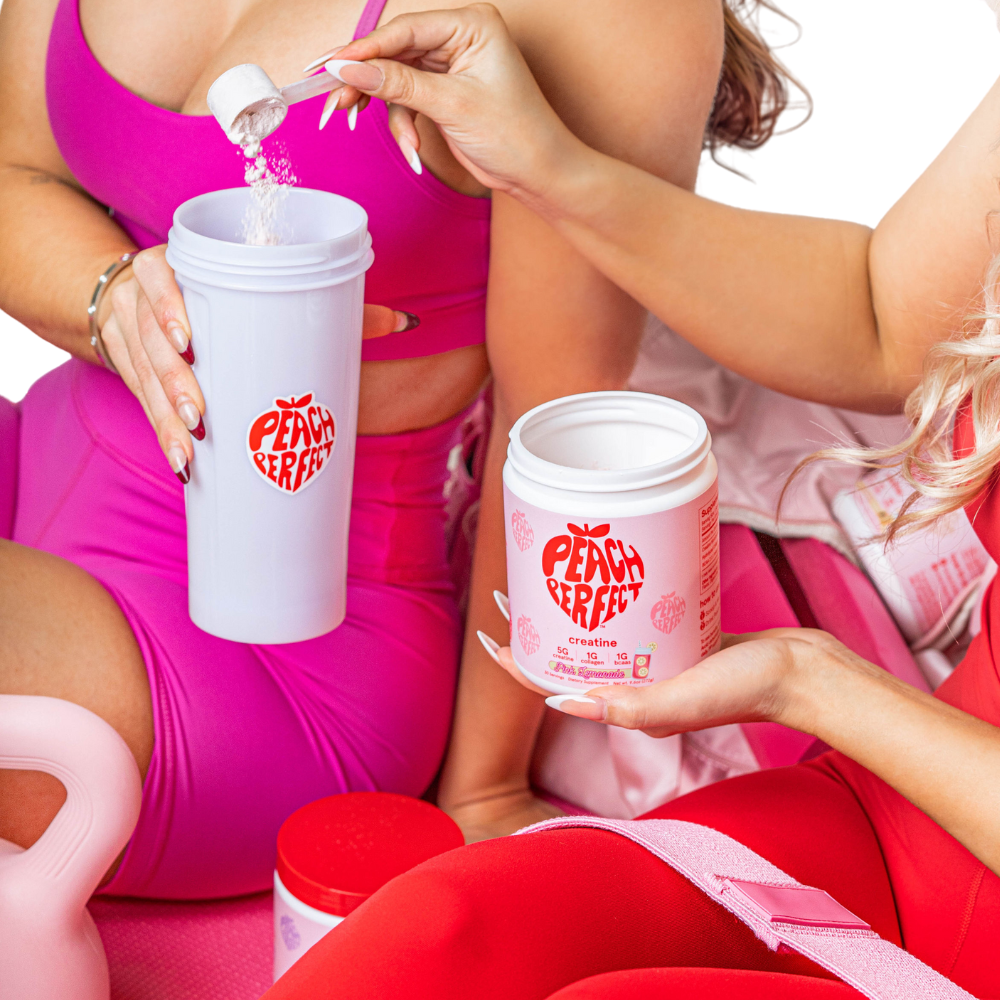
Your workout is planned. Your playlist is ready. Choosing a creatine shouldn’t feel like another workout.
You open a few tabs and suddenly it’s powders versus gummies, different forms, different serving sizes, and a lot of promises. Start by turning the tub around. The back tells a more useful story: what’s in your serving, how much you get, and how it fits into your day.
Let’s walk through it using Peach Perfect Pink Lemonade as a real example, then use the same questions to compare any other product.
Key takeaways
- Creatine monohydrate is the most widely used and studied form. The label should name the form
- Find grams of creatine per serving on the Supplement Facts panel, with the serving size beside it
- Read the full ingredient list. Check added ingredients separately from the creatine evidence
- Ask for product-specific documentation, such as a certificate of analysis for the lot
- Divide price by labeled servings, then compare at equal grams of creatine
The short answer
A good choice starts with a clear label.
If you want a creatine supplement and do not want to spend an afternoon on it, check five things. The form should be named; creatine monohydrate is the most studied option. The amount of creatine per serving should be stated in grams on the Supplement Facts panel. Read the complete ingredient list and check whether the creatine amount is disclosed. The brand should be able to show testing documentation for the specific product, not just a phrase on the front. And the price should still make sense once you divide it by the number of labeled servings.
Start with the form and amount. Then consider the full formula, testing information and price. You’ll have a much clearer comparison than the front of a tub can give you.
A note on what the research does and does not say. The National Institutes of Health Office of Dietary Supplements summarizes the evidence this way: creatine supplements can improve performance in repeated short bursts of intense activity with brief recovery, such as sprinting and weight training, and the size of that improvement differs from person to person. Creatine appears to have little value for endurance activities such as distance running, cycling or swimming.1 It is not a guarantee of any result, and the research describes the ingredient, not any particular finished product.
Start with the form
“Creatine” on a label can mean several compounds. Creatine monohydrate is the most widely used and studied form in supplements.1 Other forms, including creatine hydrochloride, buffered creatine and creatine ethyl ester, are usually marketed on claims of better absorption or less stomach upset. Whatever you make of those claims, the point for a label reader is simpler: the form should be named plainly. If a product lists a “creatine blend” or a proprietary complex without saying which forms are inside and how much of each, you cannot compare it with anything else on the shelf.
Where to lookThe Supplement Facts panel on the back, in the ingredient name itself. The front of the pack often says “creatine” alone.
Find the labeled amount per serving
The front of the tub might show a number. The panel on the back is what counts. Find the line for creatine and read the amount per serving in grams, then check the serving size directly above it. A serving may mean one scoop or more; check the amount for that complete serving.
Compare like with like. Some labels state grams of creatine monohydrate; others state grams of creatine. They are not identical quantities, because the monohydrate figure includes the water bound to each molecule (2021 research review). When you compare two tubs, make sure both numbers describe the same thing.
If creatine sits inside a proprietary blend, the label may give only the total weight of the blend, which tells you nothing about how much creatine you are getting. Treat that as a missing answer rather than a neutral one.
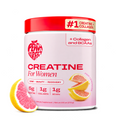
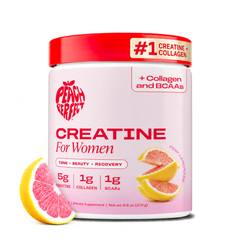
Inside Peach Perfect Pink Lemonade
Serving size: 1 scoop (15 cc)
Servings per container: 30
| Ingredient | Amount |
|---|---|
| Creatine monohydrate 200 mesh | 5,000 mg (5 g) |
| Hydrolyzed collagen | 1,000 mg (1 g) |
| BCAA 2:1:1 instant sunflower | 1,000 mg (1 g) |
Other ingredients: Citric acid, natural lemonade flavor, organic beet root, stevia Reb M.

Here’s the useful distinction: 5 g is the creatine monohydrate amount, not the total weight of everything in the scoop. Collagen and BCAAs have their own lines. The scoop’s 15 cc measurement describes volume, not grams.
Read the whole ingredient list
A single-ingredient creatine powder has one line on the panel and perhaps nothing else. Many products marketed to women add collagen, amino acids, vitamins, electrolytes, flavors, sweeteners or anti-caking agents. Read each addition and its amount. Compare the full formula, directions and current price instead of assuming every added ingredient improves the product.
What additions do not change is the evidence. Research on creatine describes creatine. The Office of Dietary Supplements notes that most ingredient combinations in performance supplements have not been studied, and that makers usually do not run studies on their own finished products.1 So a long ingredient list with a research citation beside each ingredient does not add up to evidence for the combined formula, whoever makes it. That includes us.
Where to lookRead Supplement Facts for dietary ingredients, then the “Other ingredients” list for items such as flavors and sweeteners. FDA explains these label sections.
Ask for product-specific documentation
In the United States, the Food and Drug Administration does not test or approve dietary supplements before they are sold. Manufacturers are responsible for the safety of their products and for truthful labels.1 Ask the brand what product-specific documentation is available and what it covers.
A phrase like “third-party tested” on the front of a pack is a claim. A certificate of analysis for the product you are holding, ideally for its lot number, is evidence. Some brands enroll products in named certification programs that test for banned substances and list certified products on the certifier’s own website,1 which you can check yourself. If the available documentation leaves a question unanswered, keep that uncertainty in your comparison.
Pick a format you will actually use
Compare powder, capsules and chewables using each product’s own label. Check the creatine form, its amount per serving, any other ingredients and the directions. A capsule or chewable serving may contain several units; a powder has its own measuring and mixing instructions. Format alone does not establish equal amounts, quality or effectiveness.
Choose a format whose directions fit your routine and preferences. Check the current price per labeled serving rather than assuming one format always costs less.
Work out the price per serving
Tubs are priced to look similar on the shelf. Servings are not. Divide the price by the number of labeled servings: a $30 tub with 30 servings is $1.00 a serving; a $45 tub with 60 servings is $0.75. Then look at grams of creatine per serving so you are comparing the same amount. For another worked price-per-serving example, see our affordable creatine comparison. A larger tub is not a better deal if the serving is smaller, or if half of each scoop is something other than creatine.
NoteThe prices above are arithmetic, not quotes. Check the current price and serving count on the product you are considering.
The label questions, side by side
No brand scores and no fixed prices. These are the questions to put to any tub, where the answer sits, and what a clear answer looks like.
| Question | Where it appears | A clear answer looks like |
|---|---|---|
| Which form of creatine is it? | Supplement Facts panel, inside the ingredient name | A named form such as “creatine monohydrate”, not “creatine blend” |
| How much creatine per serving? | Supplement Facts panel, amount per serving | A figure in grams, with the serving size directly above it |
| What else is in it? | The rest of the panel plus the “Other ingredients” line | Named dietary ingredients and disclosed creatine amount; identify any proprietary blend total |
| Is there documentation for this product? | Brand website, a QR code on the pack, or on request | A certificate of analysis for the product or lot, or a listing on a named certifier’s site |
| Which format, and how many units make a serving? | Front of pack and the serving size line | One level scoop, or a stated number of capsules or chewables |
| What does a serving cost? | Price tag divided by servings per container | A per-serving figure you worked out yourself, compared at equal grams of creatine |
A routine that fits
Follow the serving directions on the label you choose. If you are pregnant, nursing, managing a medical condition or taking medication, talk to your clinician before adding any supplement.1 The Office of Dietary Supplements also notes that creatine commonly causes some weight gain through water retention, and that rare reactions include muscle stiffness, cramps and stomach upset.1 Knowing that in advance makes the first weeks easier to read.
Beyond that, the routine question is a habit question. If you’re deciding whether a workout or meal makes the best cue, our creatine timing guide explains what the studies do—and don’t—show about when to take it. Attach the serving to something you already do every day, keep the tub where you will see it, and give the label checks above five minutes before you buy rather than five weeks after.
Questions
Is creatine only useful if I lift weights?
The strongest evidence is for repeated short, intense efforts with brief recovery, such as sprints and resistance training; it appears to offer little for endurance activities.1 Whether that matches how you train is the question to answer first.
Do women need a different creatine from men?
The ingredient is the same. Products marketed to women can differ in their complete formulas and directions. Compare the actual labels. Much of the research has been done in young men,1 so a cautious reading of any claim made specifically about women is reasonable. Apply the same label checks either way.
What does “third-party tested” on the front of a tub mean?
On its own, not much. Ask what was tested, by whom, and for which lot, and request the certificate. Named certification programs publish lists of certified products that you can check yourself.1
Is a higher price a sign of better creatine?
No. Work out the price per serving and per gram of creatine, then weigh the form, the ingredient list and the documentation. Those tell you more than the price tag does.
Sources
- National Institutes of Health, Office of Dietary Supplements. Dietary Supplements for Exercise and Athletic Performance: Fact Sheet for Consumers. Creatine entry and regulatory overview. Updated March 22, 2021; accessed October 26, 2026. ods.od.nih.gov/factsheets/ExerciseAndAthleticPerformance-Consumer/
The source describes the ingredient creatine. It does not evaluate any finished product, including ours.